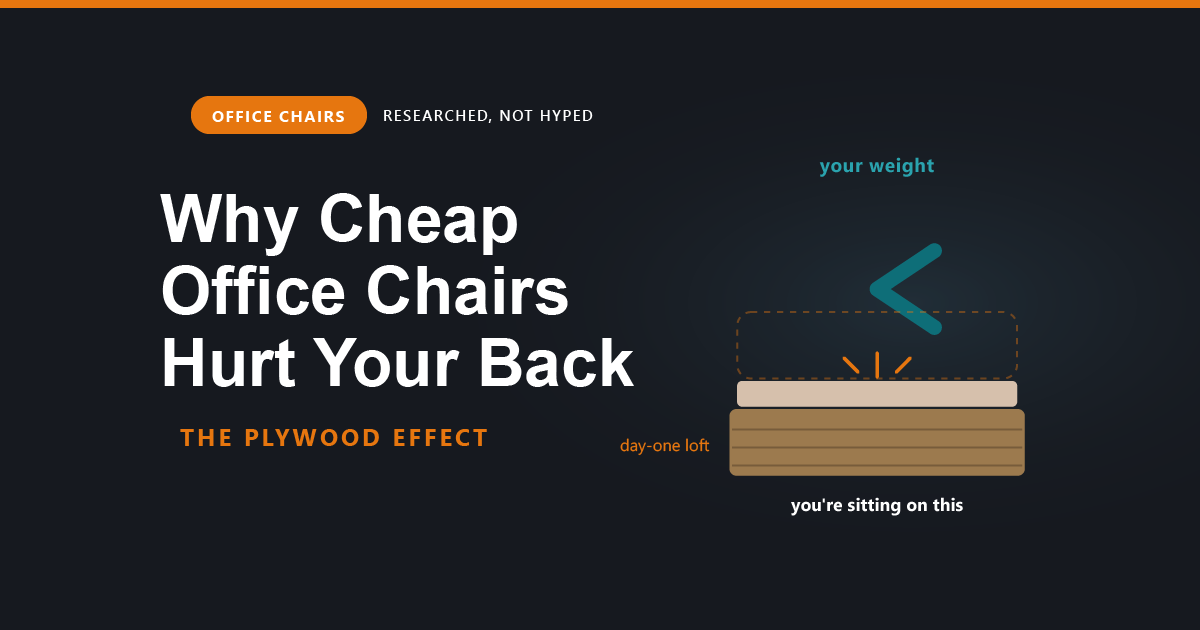
Why Cheap Office Chairs Hurt Your Back: The Plywood Effect
Open the box and a cheap chair feels fine. That’s the trap. The reason a cheap chair ends up hurting your back is something you can’t feel on day one, because the part that fails is the foam, and foam fails slowly.
What actually happens to the foam
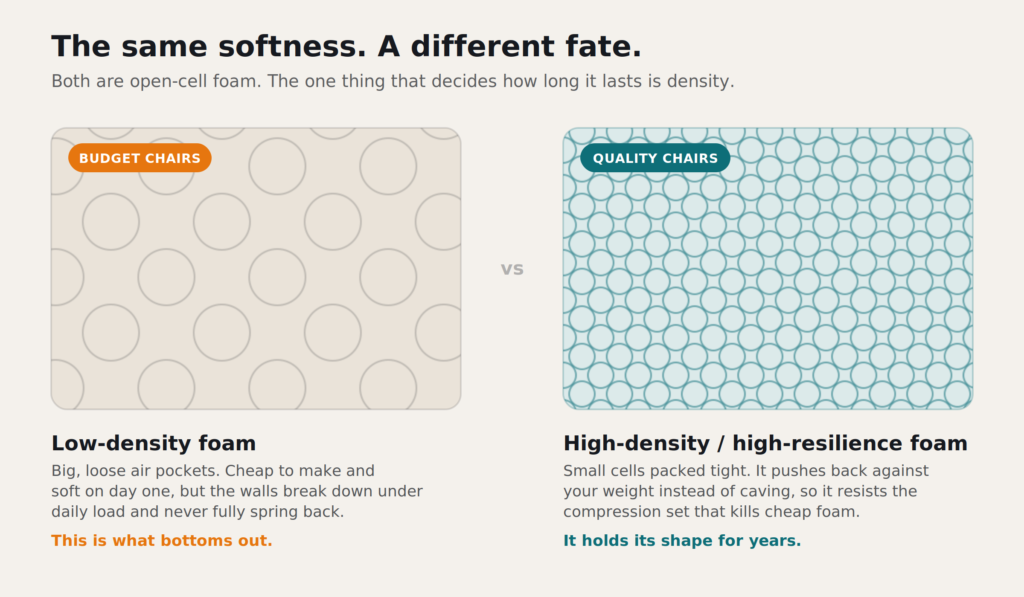
The cushion in a cheap chair is low-density polyurethane foam. It’s soft because it’s full of large air pockets, and those pockets are what make it feel plush in the store. Put daily weight on them and they collapse without fully springing back. Over time the foam thins and stops returning to its original shape. The industry term is compression set, and the lighter the foam, the faster it sets.
Once that foam flattens, your weight stops landing on cushion and starts landing on the hard seat pan underneath, which is molded plastic or a wood-based board. That’s the plywood effect. There’s a thin worn layer between you and the base, not enough to matter, and your tailbone takes the pressure.
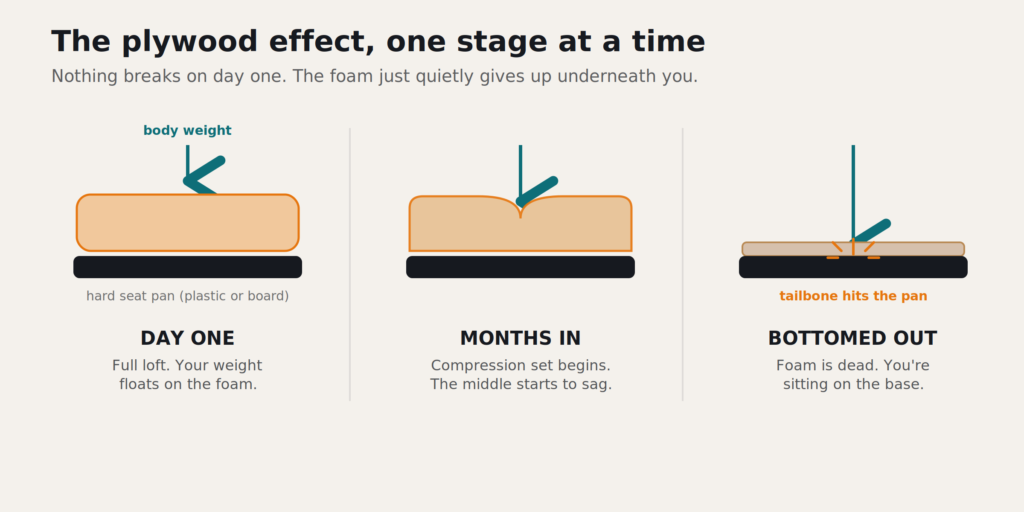
A chair you liked on day one slowly becomes something you brace against by mid-afternoon. You start leaning onto one hip to dodge the flattened spot, that throws your posture off, and the ache settles into your lower back. Most people file this under normal working-from-home stiffness and blame their body, when it’s the worn foam doing it.
The gaming chair detour
When a budget chair gives out, the racing-style gaming chair is the common upgrade. It costs more and looks more serious, which reads as more support. The support is mostly in the shape, though, not the padding.
Gaming chairs are built around a molded bucket shell for that look, with thin, firm seat foam over it. A firm shape holds you in place, but it isn’t padding, and a long editing or coding session in one can go hard on you well before you’re done for the day.
Cheap mesh is the other escape route, and it fails its own way. Mesh supports you only as long as it holds tension. Lower-grade mesh and frames lose that tension and start to sag, and a sagging seat drops you onto the frame edges, which is rougher on your posture than tired foam.
Why density is where cheap chairs hurt your back
Density is the whole story here. Budget foam is built to look thick in a product photo, with a loose structure full of cheap air pockets, and that structure is exactly what collapses under you. High-density foam packs those cells tighter, so it holds up to your weight instead of caving into a permanent dip.
Sit on high-density foam and it shrugs off the compression that ruins cheap cushions. Budget brands reach for low-density foam because it’s lighter to ship and cheaper to make in bulk, and on day one it can feel nearly as soft. The gap opens up months later, once the cheap foam has taken its set.
Density is the spec that decides whether you still like a chair next year or fight it. It’s also the hardest thing to check in a listing. High-density foam isn’t always stated, and you can’t judge it from a photo.
The number on the box is not the number that matters
That weight capacity printed on the box is a structural rating. It means the frame, base, and cylinder won’t fail under that load. It doesn’t say anything about how long the cushion stays supportive.
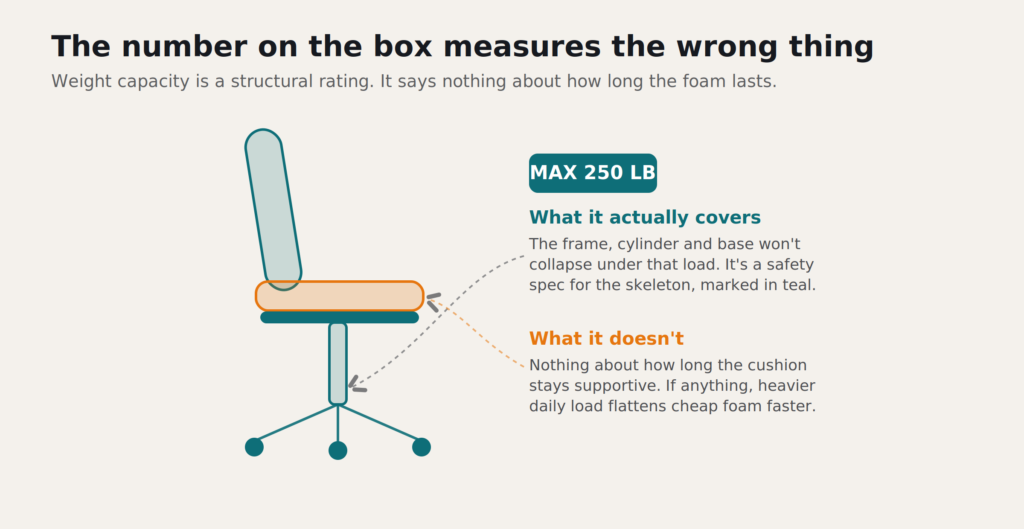
Heavier loads speed up compression set. The more weight the foam carries each day, the faster low-density foam flattens and the sooner you hit the seat pan. A chair can sit well inside its rated capacity and still bottom out on comfort, because that rating was never a comfort promise. If you’re on the heavier side, foam density counts for you more than most, and a firm high-density seat or a well-tensioned mesh setup will outlast a plush cheap cushion.
The r/OfficeChairs threads say the same thing, loudest from the heavier guys, and the number on the box barely registers with them. What they track is seat-pan width and foam density, and the firm high-density seats are the ones they say last. Bottoming out is their word for the failure. It runs all through the budget and gaming-chair threads, usually a seat that’s gone hard as a board with your tailbone aching a few hours in.
The gadget trap
Once the pain shows up, the instinct is to buy your way out of it. A heated massager one week, a lumbar pillow strapped over the dead foam the next. Six months on, the desk looks well equipped and the back still hurts.
None of that touches the actual problem. If the seat’s bottomed out, a cushion on top doesn’t fix the base you’re sitting on. If your monitor sits too low and your neck drops forward all day, a massage gun won’t undo the eight hours that caused it. The chair and the screen height are the setup. The rest is a patch over a problem that’s still there.
The exceptions, and what to actually look for
Most budget foam flattens on this pattern, but not all of it. Some entry-level chairs use firmer molded seats or better foam than the price suggests, and a well-tensioned mesh chair sidesteps the whole foam problem by not leaning on foam for support in the first place.
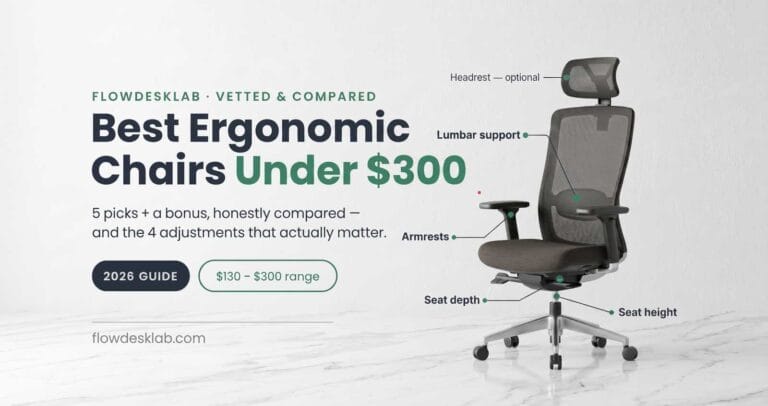
If money’s tight and you want a chair that won’t turn into a board by year-end, look for stated high-density or high-resilience foam, or a quality mesh seat, over a plush-looking cushion with no density listed. The models that hold up are in my guide to the Best Ergonomic Chairs Under $300. Skip the soft-on-day-one trap and put the money where your tailbone needs it.