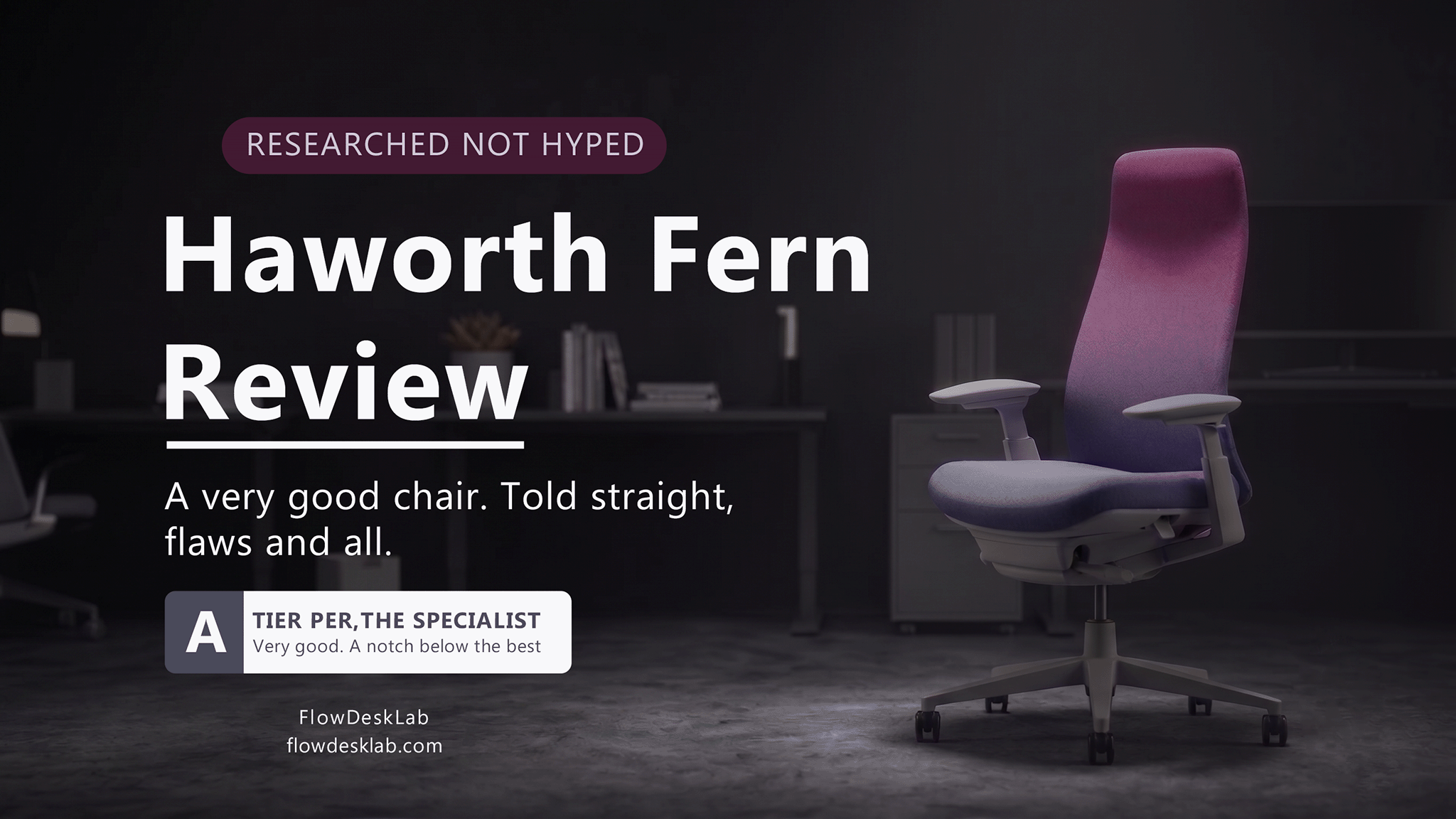
Haworth Fern Review: What It Gets Right, and Where It Falls Short
FlowDeskLab is reader-supported: if you buy through a link here, I may earn a commission at no extra cost to you. No brand paid for or previewed this review.
How I researched this Haworth Fern review: I have not lived in this chair for months, so I am not going to fake a long-term test. This review is built from Haworth’s own spec sheet, the independent ergonomic certification Haworth commissioned, the office-chair specialists at BTOD who do sit in these all day and rank them, and owner reports from r/OfficeChairs and elsewhere. Where reviewers disagree, I tell you they disagree. Prices were checked in early July 2026.
The chair you’re actually deciding on
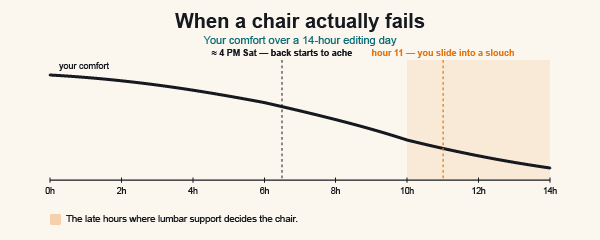
If you spend ten, twelve, fourteen hours at a desk, editing a photo gallery or building something from a bedroom office, you are not buying a chair for the first hour. You are buying it for the eighth, when your back starts asking questions. That is the lens this Haworth Fern review uses. Not a showroom sit, not a spec sheet read aloud, but how the Fern holds up for the body that has to survive a long day.
Here is the honest headline before anything else: the Haworth Fern is a very good chair, but it is not the untouchable, top-of-the-heap pick some older reviews made it out to be. The clearest signal comes from BTOD, the specialist reviewer who has ranked it S tier on their comfort list for years. In their April 2026 tier list, they moved it down to A tier. Their reason is worth understanding, because it tells you exactly what you’re getting.
Why the authority moved it S to A
BTOD’s reviewer explained the drop plainly. First, another chair edged the Fern out for him. Second, and more useful to you, his top rating had only ever applied to one very specific build: the digital knit back, with no headrest and no lumbar. Outside that exact configuration, he now calls it an A. His colleague was already rating it A and stayed there.
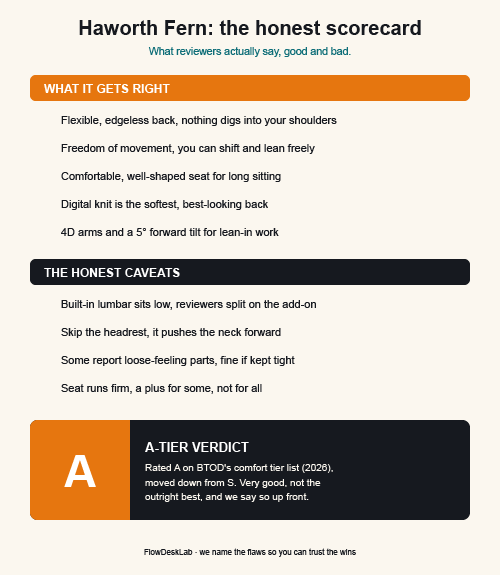
That is not a chair falling apart. It is a chair being placed where it honestly sits: excellent, flexible, comfortable, and a notch below the very best. For a review, that A-tier reality is more useful than a five-star cheerlead, because it tells you where the Fern wins and where to look elsewhere.
What the Fern gets right
The flexible, edgeless back. This is the Fern’s real signature, and it is what nearly every reviewer praises. The backrest is narrow and frameless, built on Haworth’s Wave Suspension system, so there is no hard outer edge digging into your shoulders. You can twist, lean, and shift without the chair fighting you. BTOD’s reviewers single out this freedom of movement as the thing that makes it comfortable, and owners who like to cross a leg under themselves keep choosing it for the same reason.
A comfortable, well-cushioned seat. The seat runs a touch firm, which some people love and some don’t, but it is well-shaped and spreads your weight rather than pinching. It is a genuine strength for long sitting, not a compromise.
The digital knit. If you want the softest version of this chair, the digital knit back is the one reviewers reach for. It has a sweater-like give the standard mesh doesn’t, and it photographs beautifully, which matters if the chair lives in a room you see all day. It is also, notably, the build that earned the Fern its highest praise.
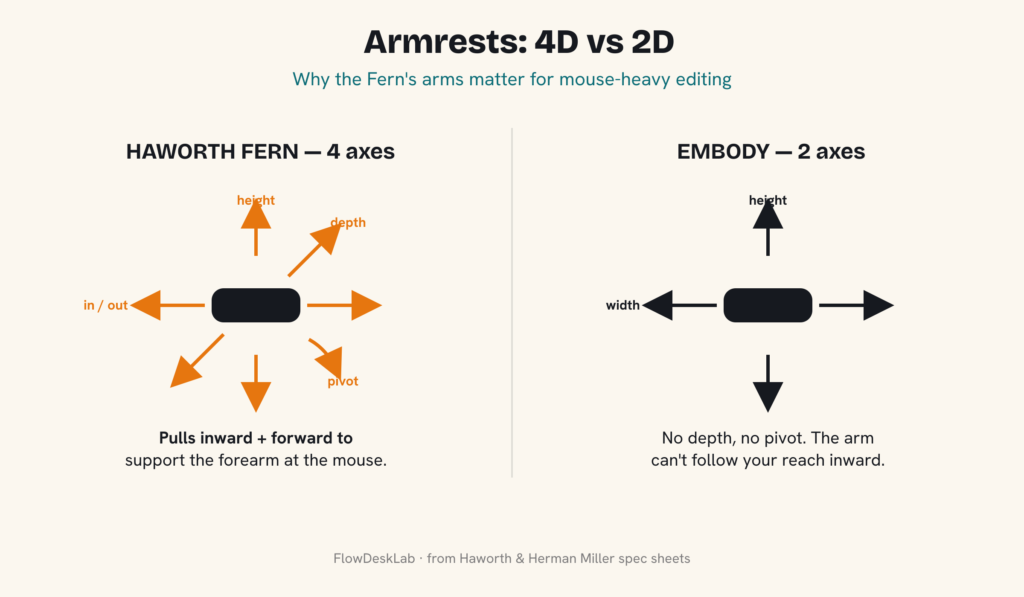
4D arms and forward tilt. The optional 4D arms move up and down, in and out, forward and back, and pivot, so they can actually follow your forearms toward the mouse during focused work. Pair that with the 5-degree forward tilt and the Fern suits lean-in desk tasks well.
The configuration you have to understand before you buy
This is where people waste money, so read it before you add to cart.
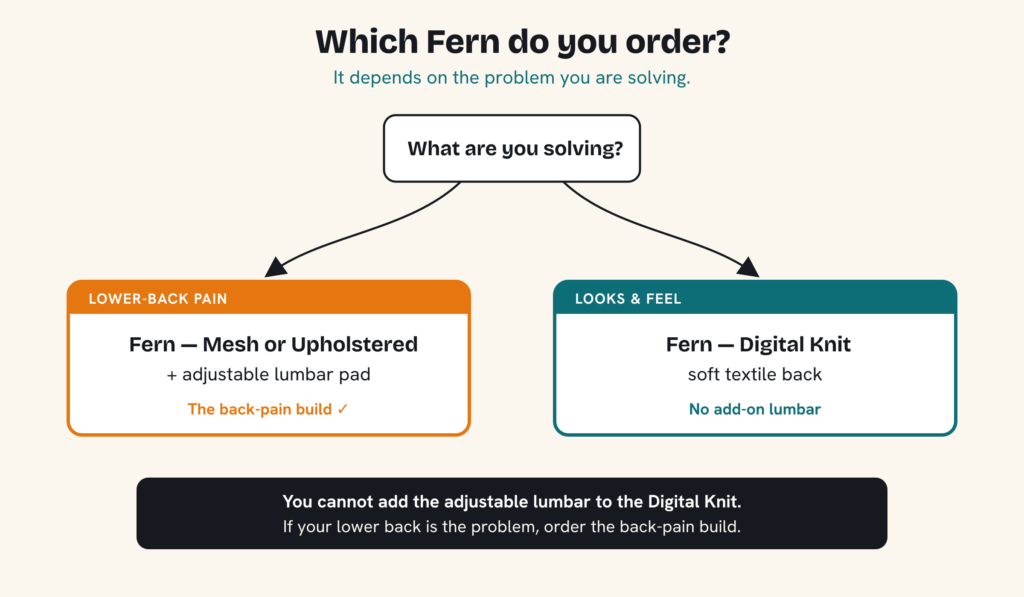
The Fern comes in a standard mesh back, upholstered options, and the digital knit. The catch: the optional height-adjustable lumbar, the forward tilt, and the headrest are not available on the digital knit. The digital knit is designed to flex on its own, without a manual lumbar to add.
So you are choosing between two builds. The mesh or upholstered back can take the adjustable lumbar and forward tilt. The digital knit gives you the softest, best-looking back but none of those add-ons. Decide which matters more to you before you configure, because you cannot have both on one chair.
The honest knocks
Lumbar is the divisive part, and it’s not the reason to buy this chair. This matters because older reviews sold the Fern on lumbar. The reality is messier. The built-in lumbar curve sits low, and one hands-on reviewer measured it roughly two inches below the ideal beltline for a 5’9″ frame. The optional air-powered lumbar can feel aggressive. And BTOD’s own two reviewers split on it in the same video: one likes the added lumbar, the other prefers the chair with no lumbar at all. When the specialists who rank it can’t agree, treat lumbar as a personal preference, not a headline feature. If firm, targeted lower-back support is your number-one need, this is not the chair to reach for first, and I’ll point you to better options below.
Skip the headrest. BTOD has said this for years, and they were absolute about it again. On the Fern the headrest tends to push your neck too far forward for active desk work. Leave it off.
The “loose parts” reputation. Some owners complain that parts of the Fern feel like they have a little play or movement, and a well-known Reddit thread calls it one of the worst chairs, which is why that thread ranks so high when you search the name. BTOD’s take, from people who assemble and test these constantly, is that the movement is manageable if everything is kept tight, and a correctly assembled Fern is solid. Worth knowing, worth checking your unit, not a dealbreaker on its own.
How it compares
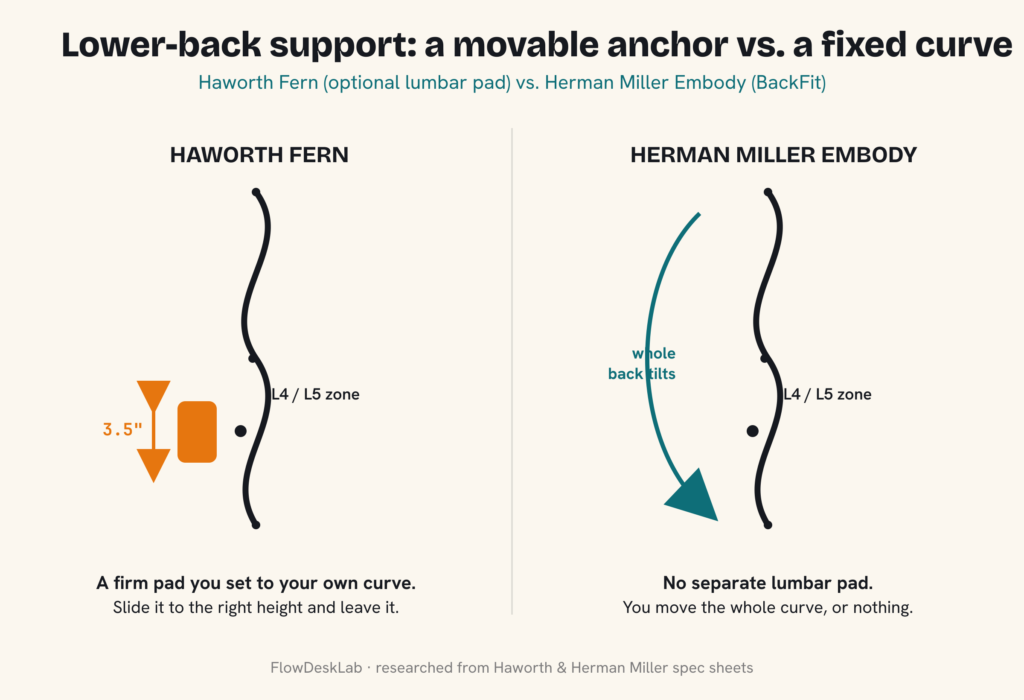
vs. Herman Miller Embody. The Embody’s whole design is dynamic float, its pixelated back conforms to your micro-movements, and its recline is superb. But it has no adjustable lumbar at all, only the BackFit dial that curves the whole back as one piece. The Fern gives you 4D arms, a forward tilt, and an optional lumbar the Embody lacks, usually for several hundred dollars less. Pick the Embody for restless, all-day float; the Fern for a flexible back with more mechanical adjustment.
vs. Herman Miller Aeron. The Aeron is firm mesh, comes in three fixed sizes, and has the better recline and the longer track record. It uses PostureFit SL for lower-back support. The Fern is one adaptive size, softer, edgeless, and friendlier if you sit cross-legged, since the Aeron’s hard seat edge is not. If breathability and a proven classic matter most, Aeron. If flexibility and a softer feel matter more, Fern.
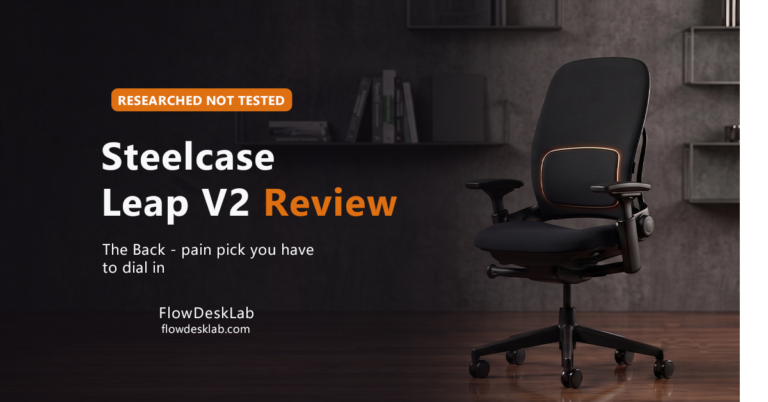
vs. Steelcase Leap V2. This is the honest one. If your main problem is lower-back pain and you want firm, targeted lumbar you can dial in, the Leap V2 is the stronger pick: it has an adjustable lumbar slide with a firmness control and is the reviewers’ go-to for back issues. The Fern wins on the flexible back, the looks, and the freedom of movement. Buy the Fern for comfort and feel; buy the Leap for targeted back support.
What it costs
Prices move with Haworth’s frequent sales, so confirm before you buy. As of early July 2026, the gradient, no-lumbar Fern runs about $1,120 on Amazon, and the mesh base is around $1,180 on Haworth’s own store, with flash sales pushing it near $1,000. The digital knit and added options push it higher. It carries a 12-year warranty, a 30-day trial, and is rated for users up to 325 lbs.
The verdict
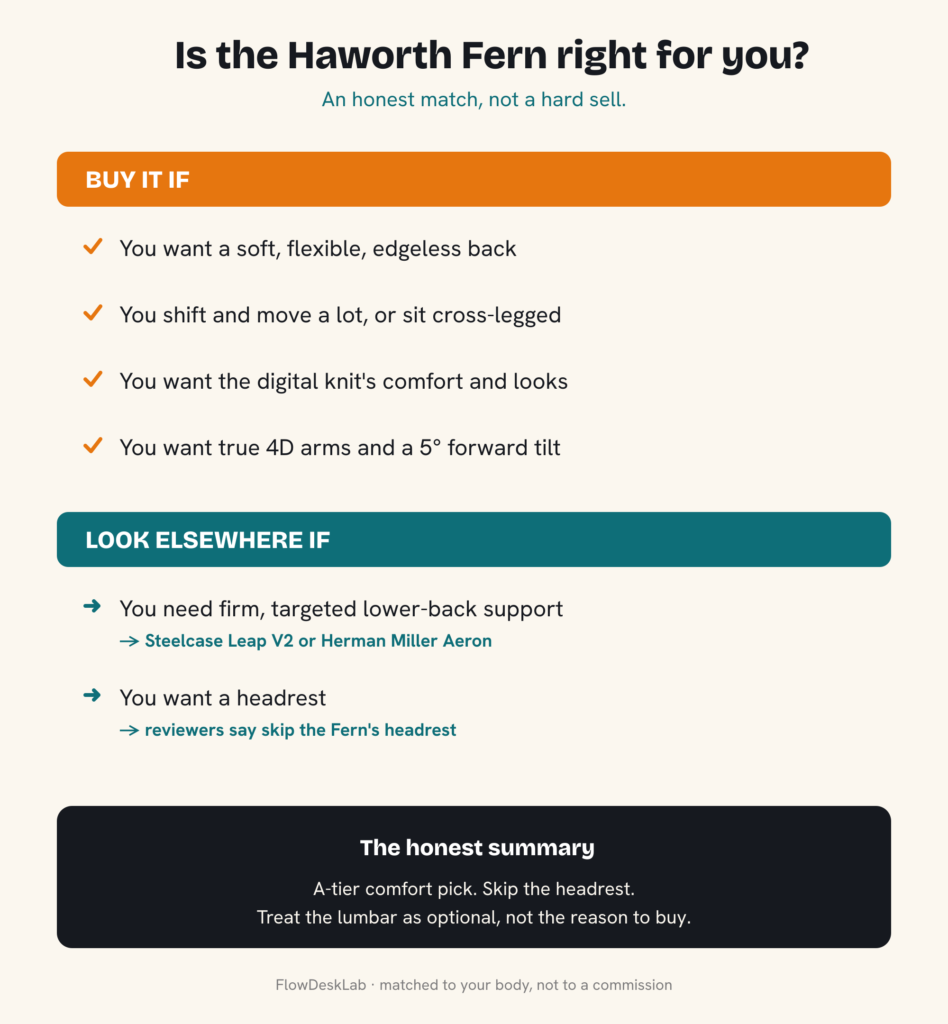
Buy the Haworth Fern if you want a comfortable, flexible, good-looking chair for long days, especially if you like a soft, edgeless back you can move freely in, or you sometimes sit cross-legged. The digital knit is the version to get for pure comfort and looks. Leave the headrest off. Treat the lumbar as optional, not the reason you’re buying.
Look elsewhere if firm, targeted lower-back support is your first priority. The Steelcase Leap V2 or the Aeron will serve that better, and I would rather tell you that than oversell the Fern.
Whichever you choose, buy through the manufacturer or a listing with the full 12-year warranty and the 30-day trial, so you can send it back if your body disagrees with my analysis.
Frequently asked question
Is the Haworth Fern worth it?
For comfort, flexibility, and looks over long days, yes, it’s a genuinely good chair. Just go in knowing specialists rank it A tier, very good rather than the outright best, and that its lumbar is a personal-preference feature, not a standout one.
Does the Haworth Fern have good lumbar support?
It’s divisive. The built-in curve sits low, the optional adjustable lumbar can feel aggressive, and reviewers split on whether to use it at all. If firm, targeted lumbar is your top need, the Steelcase Leap V2 is a better fit.
Mesh or digital knit Fern, which should I get?
Digital knit for the softest, best-looking back, but it cannot take the adjustable lumbar, forward tilt, or headrest. Mesh or upholstered if you want those add-ons. You can’t combine the knit with the lumbar.
Should I get the Fern with a headrest?
Most reviewers say no. On the Fern the headrest tends to push your neck forward for active desk work. Skip it.
How much is the Haworth Fern?
Around $1,120 on Amazon for the gradient no-lumbar build and about $1,180 for the mesh base on Haworth’s store as of July 2026, with sales dropping it lower. Digital knit and options cost more.